Education
Building Trusted Learning Ecosystems in Moodle That Are Ready for What's Next
How Moodle Marketplace and Certified Integrations make it easier for institutions to find trusted solutions and build more inclusive learning experiences.
October 15, 2026
Discover how ReadSpeaker and SMOWL combine academic integrity and accessibility to support reliable, inclusive online assessments within the Moodle ecosystem.
As online assessments and the integration and use of AI become increasingly commonplace, institutions find themselves at a critical juncture: they need to maintain the integrity and rigour of their assessments in order to guarantee and uphold the value of their qualifications.
This critical juncture may also be the perfect opportunity for institutions to leverage technology to take a step forward, rather than being left behind.
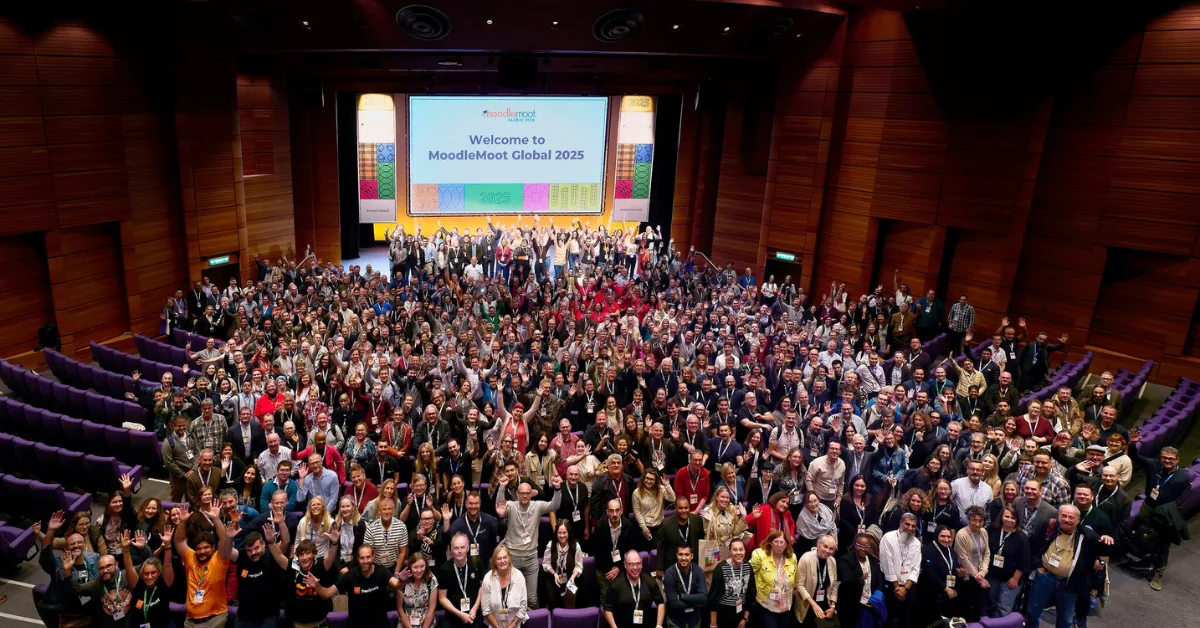
This situation was the focus of the joint presentation by ReadSpeaker and Smowltech (opens in a new tab) at MoodleMoot Chile, where both organisations demonstrated how the combination of integrity and accessibility is key to supporting educational institutions.
As Patricio Carrasco, co-founder and CCO of MindFree, the Moodle Partner that organised MoodleMoot Chile and suggested the joint session, explains:
“As a Moodle Partner, MindFree helps institutions build platforms that respond to their educational challenges. Certified integrations are an important part of that work, and their value grows when they are seen as part of an ecosystem, not as standalone tools. That is why, at the first MoodleMoot Chile, we wanted to put the collaboration between Moodle HQ, Moodle Partners and Certified Integrations at the centre. We invited Smowltech and ReadSpeaker to take part not just for their solutions, but as key players in an ecosystem that, together, enriches the learning experience.”
Patricio Carrasco, Co-founder and CCO, MindFree
The conversation that started in Santiago continued at MoodleMoot Costa Rica and expanded at MoodleMoot Europe 2026 in Barcelona, where we took it to a joint keynote with Moodle HQ.
Online learning has matured. What was once an alternative delivery model is now an essential part of education, from higher education and professional training to lifelong learning.
At the same time, assessment has become one of the biggest challenges institutions face. The widespread adoption of generative AI, the growing importance of remote assessment and the increasing expectations of digitally native learners have raised the bar for what a modern assessment experience should deliver.
Institutions need assessment processes that are reliable, credible and able to protect the value of the qualifications they award. At the same time, the assessment process must be fair, inclusive and accessible to all, to ensure that learners can demonstrate their knowledge in a reliable manner.
We can therefore conclude that the right technology can help to ensure the integrity and accessibility of the assessment, whilst also meeting learners’ expectations and needs.
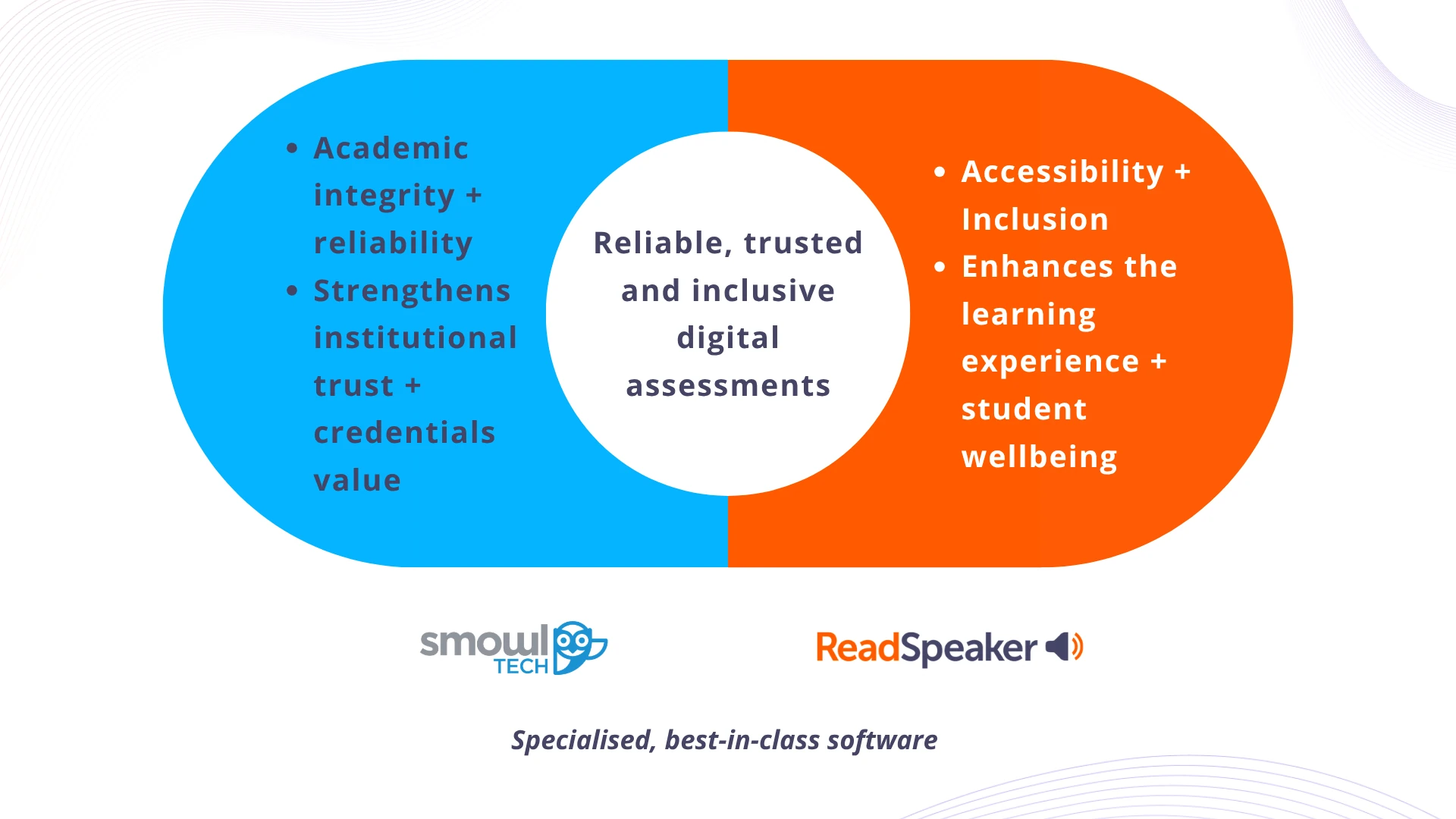
Academic integrity and accessibility are often discussed independently, yet together they create the foundation for assessment experiences that institutions can trust and students can approach with confidence.
 (enlarge image)
Reliable assessments depend on more than secure processes. They also depend on giving every learner the opportunity to demonstrate their knowledge under the best possible conditions.
Academic integrity protects the credibility of assessment outcomes, reinforces institutional reputation and helps preserve the value of academic credentials in an increasingly digital world.
Accessibility raises the quality of the learning experience by ensuring students can engage with assessment content in ways that work for them. Increasingly, this means moving beyond traditional accommodations and towards a Universal Design for Learning (UDL) approach, where accessibility is built into the assessment experience from the start.
This shift matters because many learners who would benefit from additional support never formally identify themselves or request accommodations. Instead, they adapt to barriers that should not exist in the first place.
Designing assessments that are accessible by default creates a more inclusive experience for every learner while improving usability for everyone. Combined with trusted assessment technologies, it also creates a more consistent user experience across the entire assessment journey.
With ReadSpeaker, this starts long before the exam. Students can read, listen or do both on any device, including the Moodle App: in documents, forums and quizzes, in SCORM packages built with tools such as Rise, isEazy, Genially or H5P, and in H5P content embedded in Moodle. ReadSpeaker webReader also holds CAST’s UDL Product Certification; CAST is the organisation behind the UDL framework. Learners use it in very different ways: to review on the move, to take a break from the screen, or to stay focused when cognitive load peaks. At UNAD in Colombia, a university that builds on UDL, students listened to 1.3 billion characters in a single year, with usage rising in exam periods. And because Smowl does not flag ReadSpeaker as a cheating attempt, students who rely on text-to-speech can keep using it during a supervised exam.
Together, integrity and accessibility raise the overall standard of digital assessment while supporting a better experience for students, educators and institutions alike.
 (enlarge image)
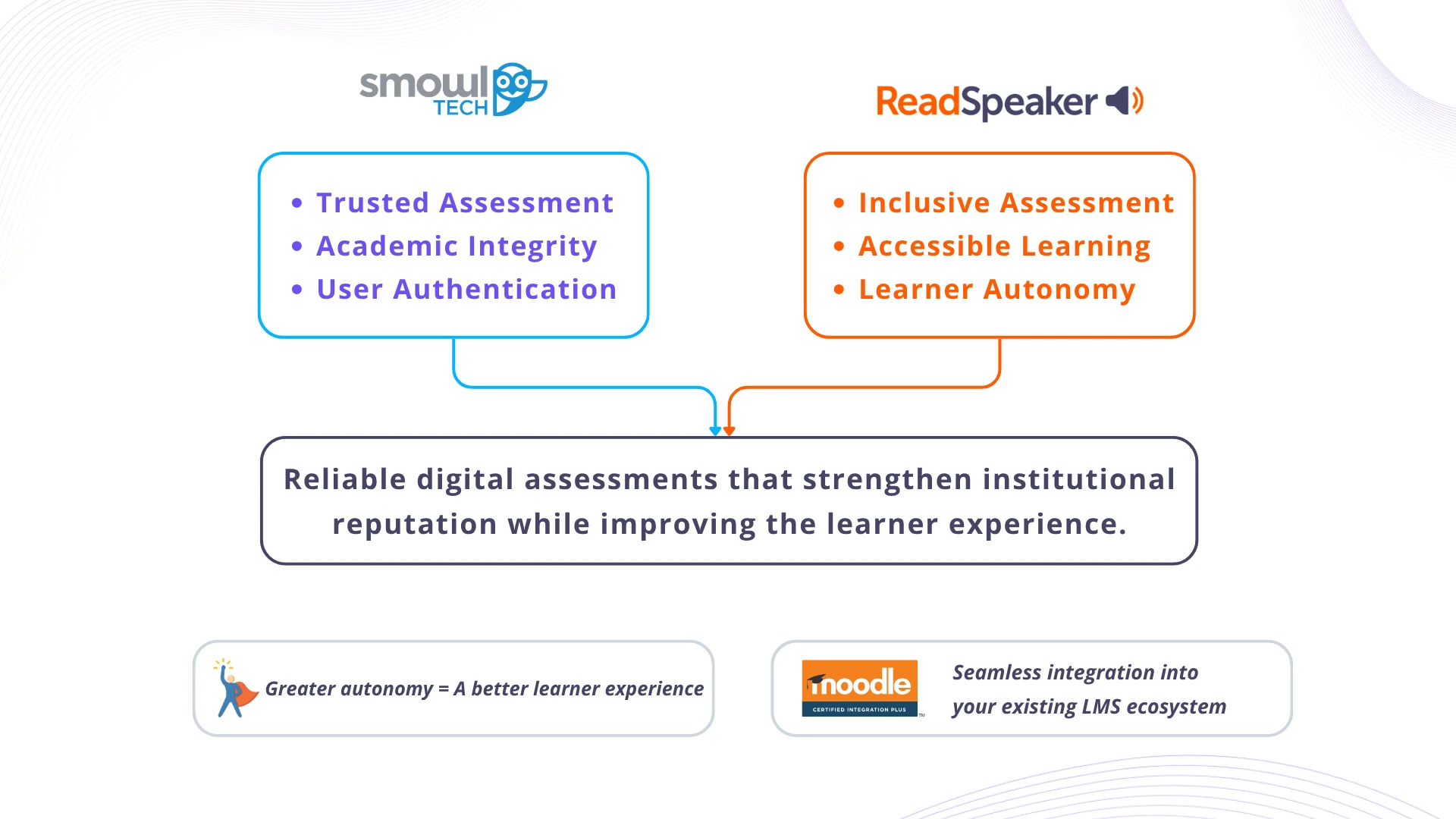
Technology is most effective when it becomes part of a familiar learning environment rather than an additional layer that students need to navigate and institutions need to install.
Keeping learners within the same LMS ecosystem throughout their learning and assessment journey reduces unnecessary friction and allows them to focus on demonstrating what they know rather than learning new systems at the most critical moment.
That consistency supports learner autonomy, improves confidence and contributes to student wellbeing during one of the most demanding stages of the learning experience.
This is why seamless integrations have become increasingly important across leading learning platforms such as Moodle, Canvas or D2L Brightspace.
Within Moodle, both ReadSpeaker and Smowl are Moodle Certified Plus Integrations (opens in a new tab), which means they have passed Moodle HQ’s security, accessibility and UX audits and stay compatible with each new Moodle release. The same philosophy extends across other leading LMS platforms, allowing institutions to combine accessibility and academic integrity within the digital environments they already trust.
As digital assessment continues to evolve, institutions are increasingly recognising that reliability, inclusion and learner experience are not separate priorities. Together, they define the quality of modern assessment.
If you'd like to learn more about how ReadSpeaker and Smowl (opens in a new tab) integrate seamlessly into your LMS ecosystem to strengthen academic integrity while creating more accessible and inclusive assessment experiences, explore our partnership here.
Education
How Moodle Marketplace and Certified Integrations make it easier for institutions to find trusted solutions and build more inclusive learning experiences.
Education
See how ILIAS and ReadSpeaker's text-to-speech technology work together to create more flexible learning experiences, with insights from the University of Stuttgart.
Education
Over the past year, we’ve immersed ourselves in the digital assessment community, through conferences, webinars, research, podcasts, and conversations with assessment leaders. Along the way, several themes have consistently emerged. These are the ideas we believe are shaping the future of accessible digital assessment.