Education
Integrity Meets Inclusion: Building Reliable Online Assessments in the Age of AI
Discover how ReadSpeaker and SMOWL combine academic integrity and accessibility to support reliable, inclusive online assessments within the Moodle ecosystem.
May 1, 2026
Accessibility in exams improves student mental health, reduces anxiety and nervousness, ensures fairness, and delivers better learner outcomes for all.
Exam day represents a moment of truth that often triggers intense anxiety for students. When familiar study tools suddenly become unavailable in testing environments, students face a double burden: demonstrating subject mastery while adapting to unfamiliar conditions under high-stakes pressure.
The discontinuity between how students learn and how they’re tested creates unnecessary stress that undermines performance. A student who routinely uses Text to Speech (TTS) during coursework but encounters silence during exams must simultaneously recall content knowledge and adapt to a foreign learning mode. This cognitive disruption often transforms assessment day from a demonstration of learning into an endurance test.
Educational technology, particularly TTS solutions that maintain consistency between study and testing environments, fundamentally changes this dynamic. By preserving familiar learning modalities during assessments, these tools reduce exam anxiety while enabling students to focus cognitive resources on answering questions rather than managing environmental stress.
Across real-world assessment environments, from education platforms to industry testing providers and workplace training, this consistency is already proving essential for both ensuring fair exams while also improving learner performance.
TTS technology provides critical continuity that reduces exam-day stress by maintaining familiar learning conditions when students need them most. Many students prepare for assessments using audio-supported materials. In doing so, they develop neural pathways and confidence around multi-modal learning approaches that support their comprehension.
Disrupting this established pattern during high-stakes testing creates cognitive dissonance that interferes with performance. Students must redirect mental energy from content recall to environmental adaptation precisely when they need maximum focus on demonstrating knowledge.
The stress response compounds these challenges. Anxiety impairs working memory, making it harder to access learned information. When students also struggle with unfamiliar testing conditions, stress levels escalate further, creating a cycle where environmental barriers amplify cognitive interference.
Consistent TTS access breaks this cycle by preserving the learning modalities students have practiced throughout their coursework. When integrated into the assessment interface itself, students encounter the same voices, controls, and interactions they already know, removing uncertainty at the exact moment they need confidence.
Because ReadSpeaker is embedded directly into the assessment environment, there’s no need to switch tools or rely on external support. Everything works seamlessly within the exam itself. Familiar voices, reading speeds, and interface interactions reduce cognitive load, allowing students to channel their full attention toward answering questions rather than managing technological stress.
In practice, we are already delivering this level of continuity through our partnerships with e-assessment and online exam platforms like Cirrus, where ReadSpeaker is embedded directly into the exam environment. These vital partnerships ensure students can access the right support tools they need for success, delivering fairness to all students without sacrificing exam rigour.
As Cristina Gilbert from Cirrus explains:
“[ReadSpeaker] really cares about students as well. Our whole goal is to make exams more inclusive and more accessible. ReadSpeaker gets that vision. They help us make exams better.”
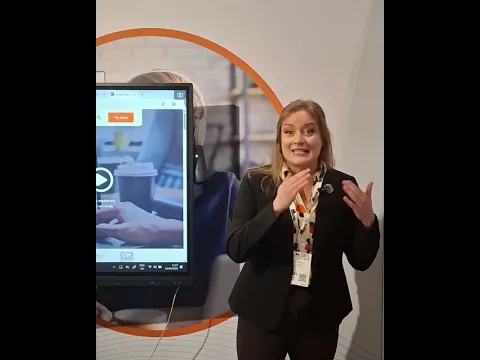 (play video)
Inclusive assessment design that incorporates universal TTS access significantly reduces test anxiety by eliminating the stigma and disclosure requirements associated with traditional accommodation processes. Students who benefit from audio support no longer face the psychological burden of identifying themselves as “different” or requiring “special” treatment.
The universal availability removes the administrative stress of requesting accommodations, waiting for approvals, and navigating complex disability services processes. These procedural requirements often create additional anxiety layers that persist into the testing environment, where students worry about whether their accommodations will function properly.
Self-efficacy improves when students can rely on consistent learning tools across all educational experiences. Rather than feeling dependent on external accommodations, students develop confidence in their ability to learn effectively using the technological supports that work best for their learning style.
The psychological safety of knowing that preferred learning modalities will remain available during testing reduces anticipatory anxiety that can interfere with study preparation. Students focus on content mastery rather than worrying about adaptation challenges they’ll face on exam day.
This impact becomes clear in real assessment environments. At Professional Assessment Ltd (PAL), for example, embedding ReadSpeaker TTS gave learners more independence and control during exams, while also improving consistency.
“I felt far more relaxed and at ease, and less stressed about the exam. The words were clearer, as I am dyslexic, and it helped keep me at ease,” Cleaning Hygiene Operative Apprentice at Professional Assessment Ltd
By allowing learners to control pacing, replay content, and engage with text in a way that works for them, TTS doesn’t just support accessibility, it actively reduces anxiety in high-stakes moments.
TTS technology supports mental resilience during assessments by providing multiple cognitive pathways for accessing question content. When stress impairs one processing channel, having auditory backup ensures students can still comprehend assessment materials effectively.
The dual-channel processing creates redundancy that builds confidence. Students know that if visual processing becomes difficult under pressure, they can rely on auditory input to maintain comprehension. This psychological safety net reduces the catastrophic thinking that often accompanies test anxiety.
Voice quality influences these mental health outcomes significantly. Natural-sounding neural TTS voices create calming, familiar experiences that reduce stress responses. Robotic or artificial voices can increase anxiety by reminding students of their technological dependence rather than providing seamless learning support.
Pacing control empowers students to manage their stress responses actively. The ability to slow down complex passages or repeat difficult sections gives students agency over their testing experience, countering feelings of helplessness that contribute to test anxiety.
 (enlarge image)
 Any student who has ever experienced nerves in exams can benefit significantly from TTS continuity during assessments. These include, but are not limited to:
In reality, the benefits extend beyond these groups too, reflecting the fact that stress, time pressure, and cognitive overload are universal experiences across assessments in all walks of life.
When tools like TTS reduce that pressure, even slightly, they don’t just support some learners. They create better conditions for everyone to think clearly and perform at their best.
Successfully implementing TTS in assessments requires seamless integration that eliminates technical stress during high-stakes moments. Embedding TTS directly into assessment platforms, rather than relying on separate tools, ensures students interact with familiar environments instead of learning new systems under pressure.
In this way, TTS can become a native part of the assessment experience, not an add-on, supporting both accessibility and exam integrity.
TTS technology improves exam outcomes by enabling multi-modal learning support during the assessment itself. When students simultaneously see and hear exam questions, they engage both visual and auditory processing pathways, reducing the cognitive load associated with decoding text under stress.
This dual-channel approach is particularly valuable during high-stakes exams, when anxiety already taxes working memory. Any additional cognitive burden from struggling to read questions can significantly impair performance. TTS eliminates the decoding step entirely, allowing students to focus exclusively on performing to the best of their abilities.
This raises a broader question around exam accessibility and fairness. Traditionally, accessibility tools like TTS have been limited to students with approved accommodations. But as these tools become part of everyday learning, restricting them in exams can create new inequities.
Fairness isn’t always about giving every student the same conditions. It’s about ensuring every student has an equal opportunity to demonstrate what they know. When exams remove tools that learners rely on in daily study, they risk measuring adaptation under pressure rather than subject mastery.
Universal design approaches address this by making supportive tools available to all learners. This reduces stigma, removes administrative barriers, and better reflects how people learn and work beyond the classroom.
This shift from decoding to demonstrating knowledge is already happening in practice.
Constructiv, for example, delivers compliance exams for construction workers using assessmentQ integrated with ReadSpeaker TTS. Many candidates have the required knowledge but struggle with written questions under pressure. By enabling questions and instructions to be read aloud, the platform removes that barrier, without changing the standard being assessed.
“Constructiv organises digital exams via assessmentQ for construction workers who often have enough knowledge, but who get nervous when they can only read the questions on a screen. Because of the possibilities offered by ReadSpeaker, in combination with assessmentQ, people will be able to demonstrate what they have to offer.”
It’s a clear example of how accessible design doesn’t make exams easier, it makes them more accurate.
The mechanism works because it addresses a fundamental challenge in assessments: the ability to measure subject mastery, not reading proficiency under pressure. When reading barriers interfere with a student’s ability to access questions, the exam not only measures the wrong construct, it creates unnecessary stress.
Consistent TTS access reduces test anxiety for all students by maintaining familiar learning modalities between study and testing environments. Students don’t need to adapt to new conditions under pressure, allowing them to focus cognitive resources on demonstrating knowledge rather than managing environmental stress and unfamiliar technology.
Universal access eliminates the stigma and psychological burden of requesting accommodations while providing technological consistency that reduces cognitive load. Students experience improved self-efficacy, reduced anticipatory anxiety, and greater confidence in their ability to perform well under testing conditions.
TTS provides alternative processing pathways when anxiety impairs reading comprehension, preventing panic responses that can derail exam performance. The technology offers pacing control and auditory backup that gives students agency over their testing experience, countering feelings of helplessness that contribute to test anxiety.
Yes. When students can rely on consistent learning modalities across coursework and assessments, they develop stronger confidence and more effective study strategies. The reduced cognitive load from environmental consistency allows students to focus on content mastery rather than adaptation skills, leading to improved performance and reduced dropout rates.
The most critical factor is practice-to-test consistency using identical interfaces, voices, and functionality. Technical reliability provides psychological safety, while offline capability ensures connectivity issues won’t create additional stress. Seamless integration with familiar platforms reduces the cognitive burden of learning new technologies under pressure.
Text-to-Speech technology reduces exam anxiety by maintaining learning continuity between study and testing environments. When students can rely on familiar, embedded tools, such as ReadSpeaker within platforms like Cirrus and AssessmentQ, they experience reduced stress, improved confidence, and better performance outcomes.
Accessible exams don’t lower standards. They remove irrelevant barriers so that every student can demonstrate what they truly know.
Level the playing field for all students with accessible assessments
Contact ReadSpeaker to learn moreEducation
Discover how ReadSpeaker and SMOWL combine academic integrity and accessibility to support reliable, inclusive online assessments within the Moodle ecosystem.
Education
How Moodle Marketplace and Certified Integrations make it easier for institutions to find trusted solutions and build more inclusive learning experiences.
Education
See how ILIAS and ReadSpeaker's text-to-speech technology work together to create more flexible learning experiences, with insights from the University of Stuttgart.