Providing students with tools that meet their unique needs boosts confidence, promotes autonomy, and enhances feelings of belonging. Individualized support transforms the educational experience from one of overcoming barriers to one of embracing potential, leading to deeper engagement and improved learning outcomes for every student.
In education, accessibility has traditionally been viewed as a box that educational institutions need to check to ensure students with documented accommodations are adequately supported. But as digital learning ecosystems evolve, so does the role of accessibility. Today, accessibility tools aren’t just about access for some students. They are also about empowerment for every student.
When designed and implemented with intention, accessibility solutions promote learner agency, autonomy, and academic confidence for all learners, not just those with disabilities. This shift isn’t just philosophical, it’s foundational to how modern learning environments must operate. Built on principles of Universal Design for Learning (UDL), inclusive technologies like text-to-speech, screen readers, customizable displays, and AI-enhanced supports help all students, from neurodivergent learners to those who simply process information differently, engage, understand, and take ownership of their learning.
Compliance is No Longer the Only Driver of Accessibility
The line between “students who need accessibility tools” and “everyone else” has been fading for years. Research on cognitive load, learner variability, and Universal Design for Learning continues to reinforce what we already know instinctively. In today’s world, there is deep diversity in individual circumstances and, as a result, individuals will have different learning preferences. For example:
Some prefer to learn by listening.
Some prefer to learn by reading.
Some prefer both at once.
Some need flexibility based on context.
These aren’t special education scenarios, they are everyday realities across classrooms, majors, and grade levels. Accessibility tools like text-to-speech, highlighting, font customization, pace control, and multimodal content simply honor this diversity and reflect a shift from support on request to support by design, enabling students to choose how they learn without stigma or roadblocks.
When these tools are embedded directly into learning ecosystems such as a learning management system (LMS), students don’t have to request accommodations. Because solutions are available to all, they just click and learn.
Empowerment Through Autonomy
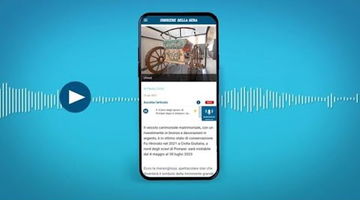
When accessibility for some is reframed as empowerment for all, it does something powerful: it shifts control to the learner. Tools like ReadSpeaker support this kind of autonomy in three key ways:
1. Pace: Students can slow down, speed up, replay, or skim content as needed which is crucial for processing-heavy courses or high-volume reading loads.
2. Modality: Audio support converts text into spoken language, allowing students to engage visually, aurally, or both, reinforcing comprehension and retention.
3. Context: Students don’t just have learning preferences; they have changing learning contexts. Listening while commuting, reviewing before class, or re-engaging late at night becomes frictionless.
The result is not just access, it’s adaptability. Imagine learning that meets students where they are and supports them in a number of important ways.
Reducing Stigma, Increasing Belonging
Often, receiving accommodations can be a lengthy and complex process. Additionally, there are a number of students that never disclose their learning challenges. However, these students can still be rescued from falling through the cracks with the right support in place. When accessibility tools are embedded for everyone, the stigma and the hurdles associated with requesting support disappears. Instead of being singled out, students experience inclusion by design.
This shift is critical in higher education, where many students with learning differences never register with disability services. Estimates suggest that a large portion of students with ADHD, dyslexia, processing differences, or executive functioning challenges never formally disclose their needs, either because of complex processes or fear of stigma. Empowering these students quietly,without paperwork, gatekeeping, or accommodation delays, improves both equity and academic outcomes. To learn more about bridging gaps in education, read our recent blog on the topic.
Students who once masked their struggles or avoided support are able to gain agency. Tools no longer signal that a student is experiencing challenges. Rather, they signal intelligent options for managing workload, enhancing comprehension, and boosting confidence across diverse student bodies.
From Compliance to Culture
Universal Design for Learning provides a roadmap for moving from reactive accommodation which only supports some to proactive design that empowers all. It calls for multiple means of engagement, representation, and expression — and accessibility tools are central to making that vision become reality.
If you look at the traditional model for accommodations juxtaposed with a more modern approach, the difference looks like this:
| Old Model | New Model |
| Accommodate a few | Support everyone |
| Retroactive adjustments | Built-in flexibility |
| Disability as exception | Variability as the norm |
| Compliance mindset | Empowerment mindset |
Empowerment-oriented accessibility isn’t about meeting minimum requirements to check a box, it’s about truly maximizing human potential.
The Future of Learning Is Multi-Modal
Today’s learners expect experiences that adapt to them, not the other way around. Audio complements text, text supports audio, visual tools reinforce understanding, and multimodal platforms meet diverse cognitive needs. With a growing reliance on audio in our everyday lives, it just makes sense to incorporate multimodal consumption into learning.
Institutions that embrace this shift report improvements in:
- Course engagement
- Retention of complex concepts
- Persistence through coursework
- Student satisfaction
- Sense of belonging
Accessibility tools, once seen simply as assistive technologies, are becoming performance technologies supporting a multitude of needs.
Redefining Student Success
When learners can engage with content in the ways that work best for them, they don’t just consume information, they build skills that extend beyond the classroom. Self-awareness, self-regulation, and learning strategy development are essential competencies for college, career, and lifelong learning.
Empowerment means equipping students not only to access information, but to give them the ability to shape their own learning journey. To read more about learner agency and text to speech, read the ReadSpeaker blog
Accessibility Is the Floor, Not the Ceiling
As educational institutions continue to adopt UDL and learner-centered design, the role of accessibility will expand from compliance to culture change. Tools like ReadSpeaker are at the heart of this transition, not because they serve a specific subset of students, but because they serve the full spectrum of learners.
From accessibility to empowerment, the future of education is not just more inclusive, it’s more human. To speak with ReadSpeaker about how text to speech can empower your learners, contact us!

Prior to entering the world of educational technology, Erin Martin spent 14 years in public education. Erin was in the classroom for 9 years and transitioned to an administrative role after receiving her Ed.S. in Educational Administration in 2013.
Erin has spent the last 10 years in educational technology sales and marketing.
Her passion is supporting inclusivity and bridging academic gaps for all students through the use of technology.