Education
Building Trusted Learning Ecosystems in Moodle That Are Ready for What's Next
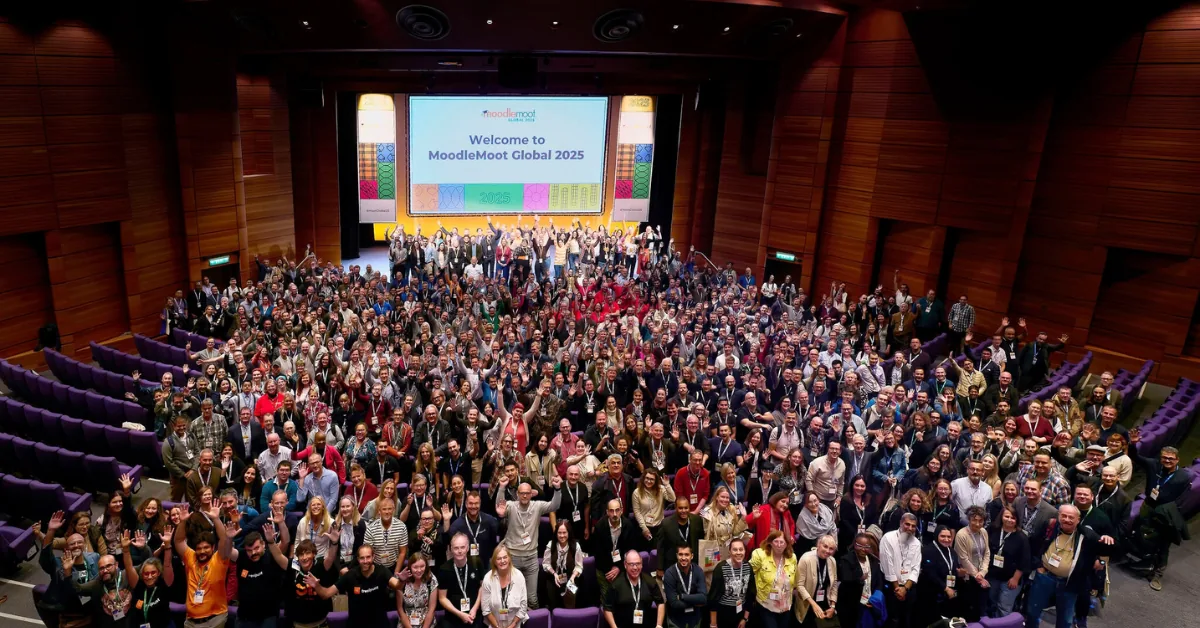
How Moodle Marketplace and Certified Integrations make it easier for institutions to find trusted solutions and build more inclusive learning experiences.
December 19, 2025
By embedding accessible learning into workshops and labs, TVET providers can improve engagement, retention, and learner success for everyone.
 Leonardo Hermoso3 min read
Vocational education has always been about giving people practical pathways into the workforce. But to truly serve that purpose, TVET must recognize that not every learner processes information in the same way.
Many students who choose vocational paths do so precisely because traditional academic environments didn’t work for them, whether due to dyslexia, ADHD, or other neurodivergent conditions, or simply because they always thrived in practical learning over theoretical.
In workshops and labs, where learning is active, these differences often matter less. But when theory is delivered only through dense text or reading-based instruction, those same barriers reappear, silently excluding learners who think differently.
Neurodivergent students (including those with dyslexia, autism spectrum conditions, or attention-related differences) represent a significant portion of vocational learners. These students tend to excel in practical, task-based, and visual environments, where they can focus on how things work rather than how they’re written.
However, when theory-based content becomes a requirement (reading manuals, safety guidelines, or technical documentation), the learning process can slow down or break down entirely. Research suggests that neurodivergent learners may spend up to 40% more time decoding written information compared to neurotypical peers (BDA, 2021).
This doesn’t mean they learn less, it means they learn differently. They often process information more effectively through audio, demonstration, or repetition rather than through text alone.
If the goal of vocational education is to prepare people for real-world work and jobs (Which are also very necessary due to the current skills gap situation), then the way we deliver theory should mirror how knowledge is shared on the job: through listening, watching, and doing.
Providing accessible learning tools, from captioned videos to speech-based interfaces, is not a box-ticking exercise. It’s a way to ensure that every learner, regardless of ability or background, can engage with and complete their training successfully.
Accessible technologies, including text-to-speech (TTS), are one step toward that goal. They enable students to listen to theory while practicing, revisit complex material at their own pace, and process information in a sensory mode that suits them best.
 (enlarge image)
 Often, when we think about accessibility, we tend to overcomplicate measures that can make a big difference. It is as simple as asking yourself really straightforward questions such as: Can they read this? Can they really understand and apply this content?
The answer and solution to these questions is very simple and can be addressed by very specific and applicable actions, such as:
When accessibility becomes part of the learning environment, engagement and completion rates improve for everyone, not just neurodivergent learners.
Making vocational training accessible isn’t just an ethical responsibility, it’s a strategic one. As industries compete for talent, training institutions that understand and adapt to diverse learning needs will stand out as modern, inclusive, and effective.
Technology, including TTS, helps make that transformation tangible, by turning information into experience, and by ensuring that every learner, in every workshop, has a fair chance to succeed.
Let us set up a free, no-strings-attached demo for you to see for yourself.
Request a demoEducation
How Moodle Marketplace and Certified Integrations make it easier for institutions to find trusted solutions and build more inclusive learning experiences.
Education
See how ILIAS and ReadSpeaker's text-to-speech technology work together to create more flexible learning experiences, with insights from the University of Stuttgart.
Education
Over the past year, we’ve immersed ourselves in the digital assessment community, through conferences, webinars, research, podcasts, and conversations with assessment leaders. Along the way, several themes have consistently emerged. These are the ideas we believe are shaping the future of accessible digital assessment.